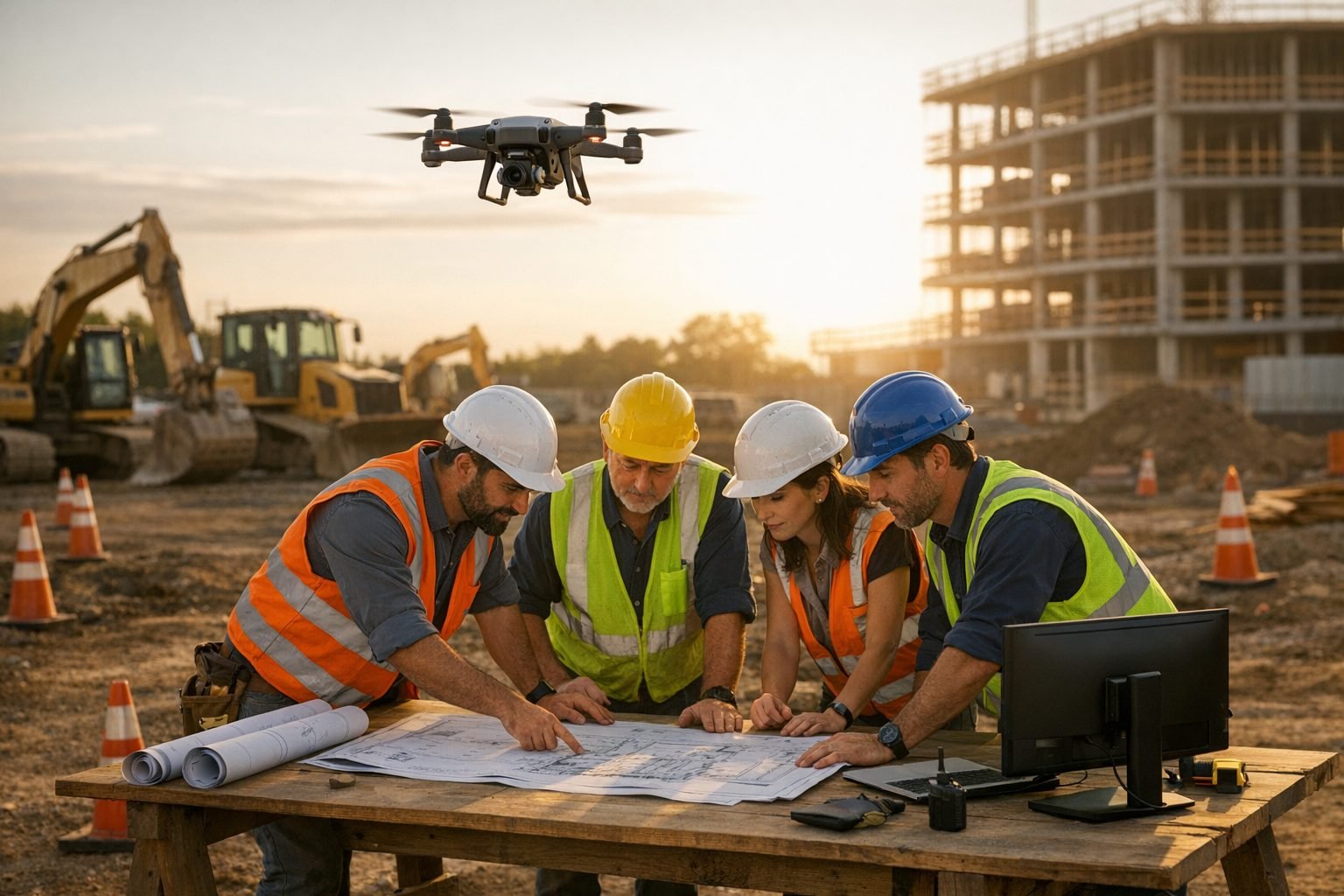
The integration of drones into construction site management is no longer a novelty; it's a necessity. As contractors face challenges like rising costs, labor shortages, and strict deadlines, the adoption of aerial technology is becoming essential. The construction industry's global market for drones is projected to exceed $19 billion by 2032, highlighting their increasing importance in areas such as surveying, inspections, and project management.
Site Surveying and Mapping
Drones have revolutionized the way contractors approach site surveying. Traditional land surveys can take an extended period, often requiring days or weeks for completion. In contrast, drones can execute these tasks in mere hours, providing extensive visual data that enhances project planning.
- Using photogrammetry and LiDAR technology, drones create topographical maps and elevation models.
- This rapid data collection allows contractors to assess terrain conditions before excavation begins, improving accuracy in infrastructure placement.
For instance, a 12-acre site that would typically take around 100 hours to survey can be completed in just two hours with drone technology, making it invaluable for large infrastructure projects where site conditions frequently change.
Progress Monitoring and Reporting
Maintaining an accurate record of project progress is crucial for contractors. Drones facilitate this by capturing consistent visual documentation that can be compared over time. This method provides:
- A reliable way to track milestones and validate subcontractor performance.
- Improved communication among field teams, clients, and investors.
Regular drone flights allow stakeholders to monitor site conditions remotely, reducing delays in approvals and enhancing transparency in project updates.
Safety Inspections and Hazard Detection
Safety is paramount on construction sites, especially in complex environments. Drones are instrumental in conducting inspections of hazardous areas, minimizing risk to workers. Key benefits include:
- Inspection of hard-to-reach or dangerous locations without exposing personnel to danger.
- Real-time identification of structural weaknesses and unsafe conditions.
For example, drones equipped with thermal imaging can detect electrical faults and heat loss in buildings, allowing for early interventions that prevent costly failures.
Earthwork and Stockpile Measurement
Efficient material management is critical for profitability. Drones help contractors measure stockpile volumes and track earthmoving progress with precision. This technology:
- Eliminates manual calculations that are often time-consuming and error-prone.
- Enables accurate stockpile measurements, improving procurement planning and reducing waste.
High-end drone systems provide survey-grade accuracy that supports civil engineering applications, leading to significant cost savings and enhanced project visibility.
Equipment Tracking and Asset Management
With numerous assets on a construction site, tracking usage and location can be challenging. Drones offer an efficient solution for monitoring equipment, leading to:
- Improved operational coordination and scheduling.
- Reduced downtime from misplaced or unavailable machinery.
Regular aerial scans allow project managers to identify underused assets and enhance resource allocation, while also deterring theft through increased surveillance.
Marketing and Client Communication
Drones also serve as powerful tools for marketing and client relations. Aerial footage enhances visual content used in presentations, websites, and social media. This technology:
- Provides clients with transparency regarding site progress and scale.
- Helps contractors showcase their capabilities effectively during bidding processes.
For remote investors, drone footage offers a unique perspective on project milestones, fostering trust and engagement.
Environmental Monitoring and Compliance
As environmental regulations become stricter, drones play a vital role in monitoring compliance. They can assess:
- Erosion, vegetation changes, and drainage systems around job sites.
- Environmental impacts without disrupting sensitive areas.
This continuous monitoring helps contractors identify risks early, mitigating penalties and project delays.
Digital Twins and BIM Integration
One of the most sophisticated applications of drones is their integration with Building Information Modeling (BIM) and digital twin technologies. Drones provide:
- Real-time data that can be compared against digital models to identify discrepancies.
- Predictive insights regarding productivity and risks through automated data analysis.
This integration supports smarter decision-making, essential for contractors operating on tight margins.
Conclusion
As the construction industry evolves, drones are becoming integral to modern site management. From enhancing safety and efficiency to improving communication and compliance, their applications are vast and impactful. By embracing drone technology, contractors can not only streamline operations but also position themselves competitively in an increasingly technology-driven market.